
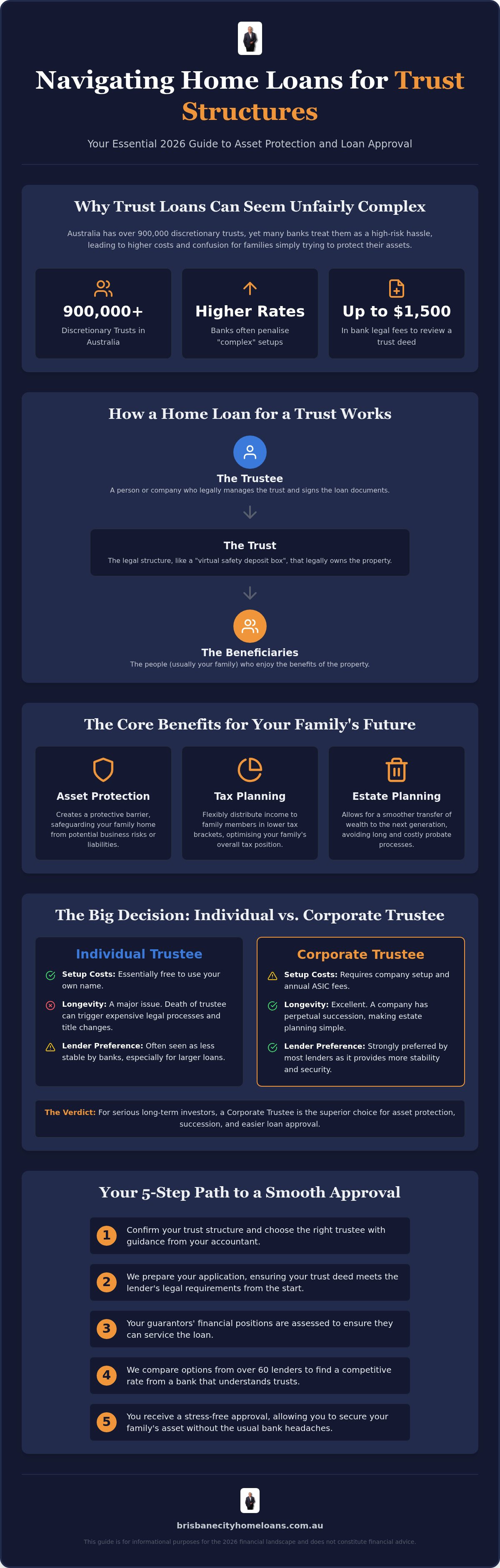
Did you know there are now over 900,000 discretionary trusts in Australia? It is a massive number. Yet, when you walk into a bank to ask about a home loan for trust structure, they often treat you like you're speaking a different language. They might hit you with higher interest rates or bury you in a mountain of confusing paperwork just because your setup is "complex". It feels like you're being punished for simply trying to protect your family's future and keep your assets safe.
We completely agree; it shouldn't be this hard. Dealing with bank legal fees that can jump as high as $1,500 just to review a trust deed is enough to make anyone's head spin. You want asset protection and tax flexibility without the massive headache. That's why I've put together this 2026 guide. I'll show you exactly how trust loans work in plain English; no jargon allowed. We'll walk through the current 3.85% RBA cash rate, the latest lending rules, and the steps to a smooth, stress-free approval so you can focus on your family instead of the fine print.
Key Takeaways
- Learn why the trust owns the house while you call the shots, keeping your family's assets safe and secure for the long term.
- See how a home loan for trust structure differs from a standard loan and why picking the right trustee is your most important first move.
- Get the lowdown on the approval process, from reviewing your trust deed to making sure your guarantors are ready for the bank's check.
- Uncover the truth about interest rates in 2026 and how to stop your current bank from overcharging you for a "complex" setup.
- Discover how Andrew helps you compare over 60 lenders to find the one that fits your family's unique financial goals without the stress.
What is a home loan for a trust structure?
In simple terms, a home loan for trust structure means the trust is the legal owner of the property rather than you as an individual. Think of a trust like a virtual safety deposit box. You put the house inside it for safekeeping. But because a box can't sign a contract, we need a Trustee. This person or company signs the paperwork and manages the loan. The Beneficiaries are the ones who actually get to enjoy the benefits, like living in the house or receiving rental income. Usually, that is you and your family.
To get the full legal picture, you might ask, what is a trust? Essentially, it is a relationship where one person holds property for the benefit of others. Banks often get a bit nervous about these setups. They have to read through your Trust Deed, which is basically the rule book for your trust, to make sure everything is legal. Because it takes their lawyers more time, they often try to charge you extra fees or higher rates. They see it as complex even when it is quite standard for many Brisbane families.
Common types of trusts used for Brisbane property
Family (Discretionary) Trusts are the most popular choice. They give you the flexibility to decide who gets the income each year, which is great for families. Unit Trusts are slightly different. Imagine a pie cut into equal slices called units. Investors buy specific slices, which is common when friends or business partners buy together. Hybrid Trusts are a mix of both, often used for very specific tax outcomes. Andrew can help you figure out which one your lender prefers.
Why bother with a trust loan in the first place?
- Asset protection: If you run a business and things go south, having your home in a trust can help keep it safe from business risks. It is about building a wall around your family's future.
- Tax planning: You can often distribute rental profit to family members who are in lower tax brackets. This helps keep more money in your pocket instead of the tax office's.
- Estate planning: It makes passing wealth to your kids much easier. You don't have to worry about the property being stuck in a long, messy probate process later on.
While the banks might make you jump through hoops, the long term benefits for your family are often worth the effort. Just as you would rely on a specialist firm like SLKQ Lawyers for expert legal representation, you simply need a guide who knows which lenders aren't afraid of a bit of paperwork.
The big decision: Individual vs Corporate Trustee
Picking the right person, or company, to sign the dotted line is a huge step in getting your home loan for trust structure approved. Think of the trustee as the legal representative. While the trust technically owns the property, the trustee is the person or entity the bank holds accountable for the debt. You have two main choices here: doing it yourself as an individual or setting up a special company to do the job.
If you are Setting up a Family Trust, you might be tempted to just put your own name down as the trustee. It is often faster to get started. But there is a reason many lenders in 2026 are nudging borrowers toward a corporate trustee. A company provides a much sturdier layer of protection and makes the whole setup look more "permanent" to a bank's credit team. It shows you are thinking about the long game.
Comparing the two paths
There are a few practical things to weigh up before you decide. Cost is usually the first thing people think about, but it shouldn't be the only factor.
- Setup costs: Using your own name is basically free. A corporate trustee requires a Pty Ltd company, which means paying setup costs and annual ASIC fees.
- Longevity: This is the big one. If an individual trustee passes away, the property title often has to be changed. This is a massive legal headache and expensive. A company lives on forever, making succession simple.
- Lender preference: Many banks find corporate trustees more stable. If you are looking for a high-value home loan for trust structure, some lenders might actually require a company trustee to even consider the application.
Which one is right for your Brisbane investment?
Don't just look at today's setup costs. Think about where you want to be in ten years. Are you planning to buy more properties later? If so, starting with a corporate trustee now avoids the cost and hassle of changing things down the track. Most serious investors eventually move to a corporate trustee because the asset protection is superior. It keeps your personal name entirely off the title deeds, which is a win for privacy and risk management.
Before we start looking at the 60+ lenders on our panel, it is a great idea to have a quick chat with your accountant. They can help you weigh up the tax side of things for your specific situation. Once you have a plan, Andrew can help you find the right lender to match that structure without the usual bank run-around. Getting it right the first time is always easier than trying to fix a messy structure three years into a mortgage.
How trust home loans work: The approval process
Getting a home loan for trust structure approved feels a bit like assembling flat-pack furniture. It looks daunting when you first open the box, but once you have the right instructions and all the pieces in front of you, it clicks together quite nicely. The process is slightly different from a standard mortgage because the bank needs to verify that your trust is legally allowed to borrow money. We break it down into four simple steps to keep things moving.
- Step 1: Reviewing your Trust Deed. This is the foundation. We check the "rule book" of your trust to make sure it has the specific power to borrow and charge property as security.
- Step 2: Assessing the Guarantors. Since a trust isn't a person, banks look for the humans behind it. This usually means the directors of the corporate trustee or the individual trustees and beneficiaries.
- Step 3: Finding a trust-friendly lender. Not every bank likes trusts. We use our panel of over 60 lenders to skip the ones that charge "complexity" premiums and head straight for those with fair rates.
- Step 4: Managing the extra paperwork. Banks love a bit of extra admin for trusts. We handle the certified copies and coordinate with the bank's lawyers to keep the process moving.
The 'Trust Deed' deep dive
Lenders are particularly picky about your trust deed. They aren't just checking if it exists; they are looking for specific clauses. The most important one is the "power to borrow." If your deed was written decades ago, it might lack the modern wording banks require in 2026. Another big one is the "foreign person" rule. Many Australian states now hit trusts with massive tax surcharges if the deed doesn't explicitly exclude foreign beneficiaries. If your deed is a bit dusty, we might need to organise a simple amendment before we apply. Also, don't forget that some states still require your deed to be physically stamped by the revenue office, which is a small but vital detail that can hold up an approval if missed.
Guarantees and your borrowing power
Even though the trust technically owns the loan, don't expect to stay completely anonymous. Most lenders will ask for a personal guarantee from the directors or major beneficiaries. This means if the trust can't make the repayments, you are personally on the hook. Because of this, securing a home loan for trust structure requires a bit more than just a pay slip; the bank will look at your personal income to ensure you can support the debt. It is also worth noting that this loan will appear on your personal credit report. This might affect your ability to borrow for a car or another personal house later on, so it is important to plan your next few years of finance before signing on the dotted line.
Are trust loans more expensive than regular loans?
"Will this cost me an arm and a leg?" It is usually the first question I hear when we talk about a home loan for trust structure. Many people worry that using a trust comes with a massive price tag. In some cases, they are right; but only if they stay with a bank that doesn't really want their business. Some big banks apply what we call a "Loyalty Tax." They see a trust deed and immediately move the application to their commercial department. This can mean interest rates are 1% to 2% higher than a standard residential loan. It doesn't have to be that way.
Right now in 2026, the RBA cash rate sits at 3.85%. While some private first mortgages for very complex scenarios can range from 8.75% to 9.5%, many of our lenders treat trust loans almost exactly like a regular investment mortgage. The trick is knowing which of our 60+ lenders has a "trust-friendly" policy that doesn't penalise you for being organised. We spend our time finding those sweet spots so you don't have to.
You also need to budget for some one-off "hidden" fees. Banks almost always hire an external solicitor to read your trust deed to make sure it is solid. This typically costs between $500 and $1,500. You might also see a fee of $200 to $500 for preparing the personal guarantee documents we mentioned earlier. While these bits of admin add up, they are a small price to pay for the long term safety of your family home.
Finding the 'Sweet Spot' in interest rates
The best lenders for a home loan for trust structure don't hit you with a "complexity surcharge." They recognise that a family trust is a normal way for Brisbane families to manage wealth. We look for lenders that allow you to use a 100% offset account within the trust. This lets you keep your cash accessible while slashing the interest you pay every month. By comparing over 60 different options, we can often find a rate that is remarkably close to what you would get in your personal name.
The real cost of a trust structure
You have to weigh the setup costs against the massive benefits of asset protection and tax flexibility. If you are a business owner or a professional, that extra layer of safety is worth its weight in gold. Think of the slightly higher legal fees as an insurance policy for your kids' future. The "best" interest rate always depends on your specific trust deed and your overall financial position. If you want to see what is possible for your situation, Andrew can run the numbers for you to find a competitive deal that fits your 10-year plan.
Why Brisbane City Home Loans is your trust loan partner
Setting up a home loan for trust structure doesn't have to be a lonely or confusing journey. You don't need to spend your weekends deciphering bank policies or arguing with call centres that don't understand your setup. I'm Andrew, and my goal is to make this whole process feel like a relaxed chat over a coffee rather than a stressful trip to the principal's office. We focus on results, not industry prestige. You get the benefit of my years of experience without any of the stuffy financial jargon that usually makes these decisions feel harder than they are.
Accessing over 60 lenders means we don't have to force your situation into a box where it doesn't fit. If one bank is being difficult about your corporate trustee or your specific deed wording, we simply move to the next one. We know which lenders have the most flexible policies for a home loan for trust structure in 2026. We handle the back and forth with the bank's legal teams so you don't have to. Our service is free to you because the lenders pay us for doing the groundwork. You get the expertise of a specialist without the specialist price tag.
Local Brisbane expertise you can trust
Brisbane has its own unique property rhythm. Whether you're looking at a classic Queenslander in Paddington or a modern new build in Chermside, the local rules and market conditions matter. If you are just starting your property journey, you might want to check out our guide on first home buyers QLD. We also enjoy working closely with your local accountant. This ensures the loan structure we find matches the tax advice you've already received. It's all about making sure the different pieces of your financial life actually fit together properly.
Get started with a free trust loan review
Ready to see what is actually possible for your family? Send me your trust deed for a no obligation policy check. I'll look for any "deal breaker" clauses that might upset a bank and help you fix them before you even apply. We'll figure out exactly how much you can borrow within your current structure without any guesswork. It's a simple, low pressure way to get the answers you need to move forward with confidence. Book a free chat with Andrew today and let's get your family's future sorted together.
Your next steps toward a secure family future
Using a trust isn't about being fancy; it's about being smart with what you've built. We've seen how the right trustee choice and a solid deed can open doors to fair interest rates, even with the current 3.85% RBA cash rate. You don't have to accept the high fees or the "too hard" attitude from the big banks. A home loan for trust structure is a practical tool when you have a guide who knows the Brisbane market inside out.
I'm here to do the heavy lifting for you. We'll compare 60+ lenders to find the one that welcomes your setup instead of penalising it. My service is free for you, and I'll be with you from the first deed review to the day you get the keys. Let's make your property goals happen without the stress and confusion. You've done the hard work of building your family's legacy; let's make sure it's protected properly.
Chat with Andrew about your trust loan today
Common questions about trust loans
Can I get a home loan for a family trust with a corporate trustee?
Yes, you absolutely can, and many Australian lenders actually prefer this setup. Having a company act as the trustee provides a clear legal structure that banks find very stable for a home loan for trust structure. It makes the transition of the property much easier if something happens to you personally. While there are ASIC fees to manage, the extra layer of asset protection is a huge win for most families.
Is the interest rate higher for a trust home loan than a personal loan?
It can be, but it doesn't have to be if you choose the right lender. Some banks try to charge a "complexity" premium of 1% to 2% by processing these through their commercial departments. However, we have access to over 60 lenders, and many will offer you the same residential rates you'd get in your own name. It's all about avoiding that "Loyalty Tax" from banks that don't want the extra admin.
Do all beneficiaries of the trust need to provide a guarantee?
No, usually only the primary beneficiaries or the directors of the corporate trustee need to sign. Banks want to see the humans who are actually in control of the money. If you have children listed as beneficiaries, they won't be asked to provide a guarantee. The bank just needs to know that the people making the decisions are personally backing the loan repayments if the trust can't.
Can I use a trust to buy my first home in Brisbane?
Yes, you can, but you need to be careful about your eligibility for government grants. Most first home buyer incentives in Queensland require the property to be held in a personal name. If you use a trust, you might miss out on things like the First Home Owner Grant. We can help you weigh up whether the long term asset protection is worth more than the upfront savings.
What documents do I need to apply for a home loan in a trust?
You'll need a few extra bits of paper compared to a standard application. The most important is a certified copy of your Trust Deed and any amendments. If you have a corporate trustee, we'll also need the company registration documents. On top of that, we'll collect the usual stuff like your personal tax returns and payslips to show the bank that the guarantors can support the debt.
Can I refinance a home loan that is currently in a trust structure?
Yes, refinancing a home loan for trust structure is a great way to make sure you're still getting a fair deal. Many people set these up years ago and are still stuck on high historical rates. We can review your current setup and compare it against our panel of 60+ lenders to see if we can lower your repayments or unlock equity for your next investment.
Is it harder to get a trust loan approved than a standard home loan?
It isn't necessarily "harder," but there are more hoops to jump through. The bank's legal team will need to spend time reviewing your trust deed, which can take a few extra days. You might also face higher deposit requirements, often around 20% to 25% for these structures. With a guide to handle the admin and talk to the lenders, the process feels just as smooth as a regular mortgage.
Can a trust loan have an offset account or redraw facility?
Yes, many trust friendly lenders offer full offset and redraw features. This is a fantastic way to manage your cash flow and reduce the interest you pay on the loan. Not every bank allows this for trusts, so we make it a priority to find the ones that do. It gives you the same flexibility as a personal loan while keeping your assets safe inside the trust.


